
The story of djuice – a Bangladeshi telecom brand that captured the hearts and minds of its audience
24 October 2020 2024-06-27 19:42The story of djuice – a Bangladeshi telecom brand that captured the hearts and minds of its audience
The story of djuice – a Bangladeshi telecom brand that captured the hearts and minds of its audience
 msohanh
 Call from the Head Office
It all started with a phone call from the Telenor head office in 2004.
Telenor Group is one of the leading telecommunications companies operating globally, mainly in the Nordics and the Asia region.
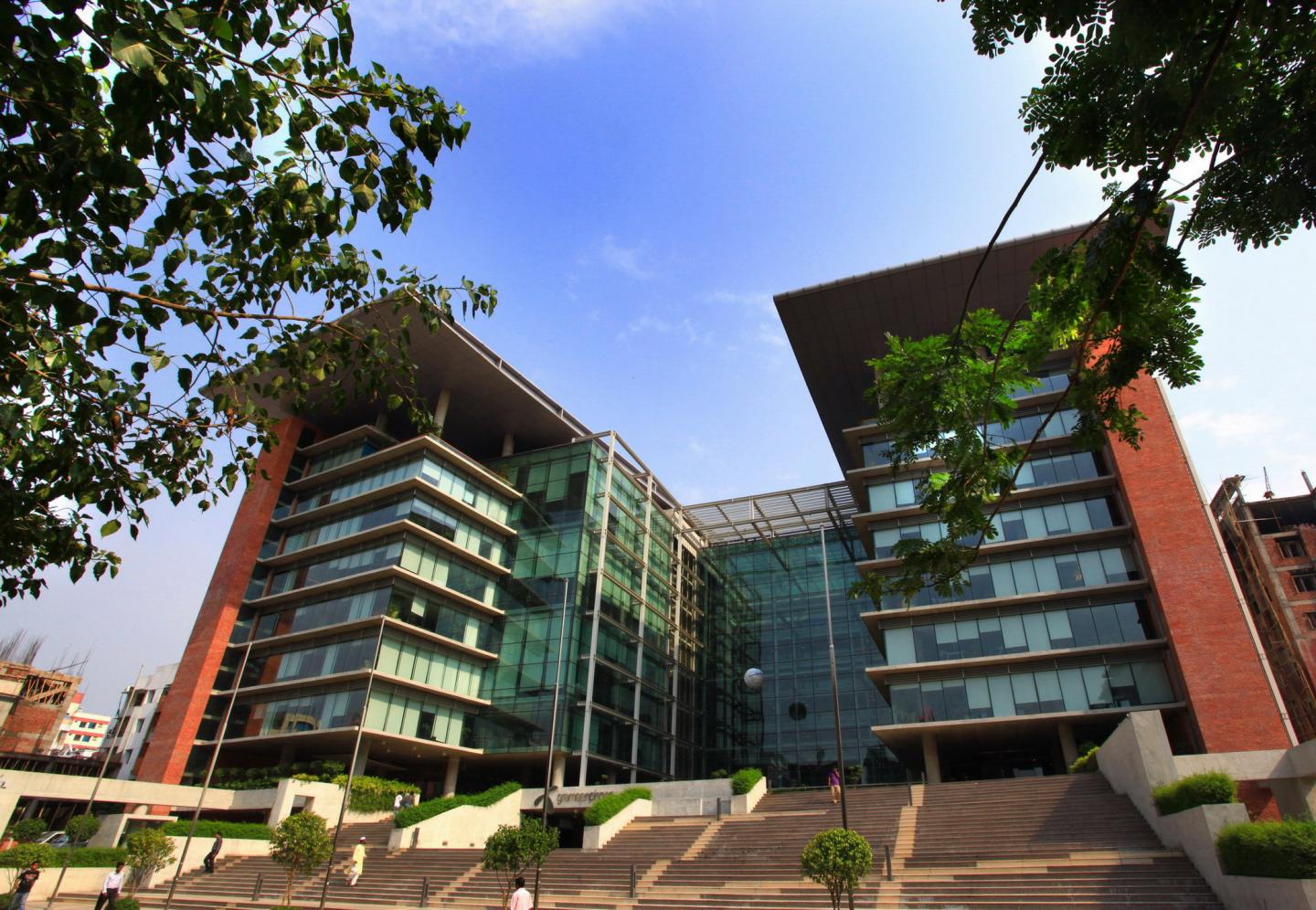
Their venture in Bangladesh is called Grammenphone (in short, GP).
Besides Bangladesh, Telenor operates in Norway, Sweden, Denmark, Finland, Thailand, Malaysia, Pakistan, and Myanmar. Launched in 2000, Digital Juice (djuice) was Telenor’s youth-based mobile phone plan.
After being successful with djuice in some of its operating countries, Telenor was now eyeing the Bangladeshi market.
Team Formation for the Assignment
After the head office explained their plan, something unusual happened at the GP office in Bangladesh.
The senior management’s hands were already full with existing products. So, they handed over the task of launching djuice to a team of young executives. Some of these executives had just finished graduation!
This empowerment motivated the young team. The young executives took the challenge head-on and didn’t want to let this tremendous opportunity go to waste. They wanted to impress their seniors and the Telenor head office.
Telenor’s marketing strategy involved having an advertising agency work with their in-house team.
At that time, Leo Burnett was their agency, so Leo Burnett’s partner company in Bangladesh, Bitopi, was tagged along with the djuice team to work on the launch.
The teams sat together, brainstormed, and worked on preparing with communication materials. Additional market research was also being conducted.
Last-minute Strategic Pivot in Messaging
As part of the market research, an FGD (Focus group discussion) was conducted. The team simultaneously worked on the communication plan.
By the time the report reached the hands of the djuice and Bitopi team, the communication materials were already developed.
The report revealed that the target audience had a very different set of behaviour than the usual customer segments of Grameenphone.
The team was surprised to see that the target audience used a very different set of keywords and their language involved new slang words which were not being used in marketing communication at the time. Being young, they relied on fast and slick words and their communication style was distinct from that of the previous generations.
The communication tone of the developed materials seemed entirely different from what the target audience was using.
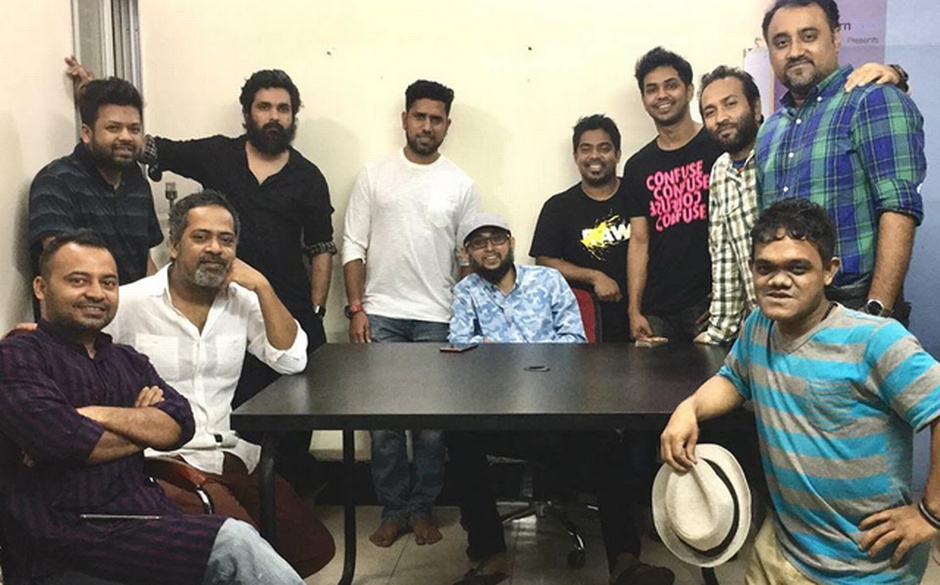
Initially baffled, the team decided to capitalize on this insight. It got rid of everything it had prepared so far and started working on a new Integrated Marketing Communication plan, keeping in mind the evolved language, lifestyle, and attitude of their target audience.
Differentiating with Brand Positioning
To position the brand, djuice focused on three things: friendship, hangout, music (বন্ধু, আড্ডা, গান). GP wanted to portray djuice as a friendly brand that consumers can relate to.
A brand that speaks to them in their own voice.
The team wanted the brand to create a sense of utopia in the mind of the consumers. By mentioning friends, hangouts, and music, the brand would bring the sense of joy that is brought by spending time with good friends or listening to music.
The initial djuice ads intentionally didn’t show any mobile phones to avoid being compared to other telecommunication brands. They portrayed the lifestyle of youth and built the brand around that.
A Content-heavy Launch
On the 14th of April, 2005, Grameenphone launched ‘djuice.’ The first TVC was directed by the famous Bangladeshi director Amitabh Reza Chowdhury. The snappy, modern-urban language in the djuice ads and the playful attitude quickly gained popularity among the Bangladeshi youth.

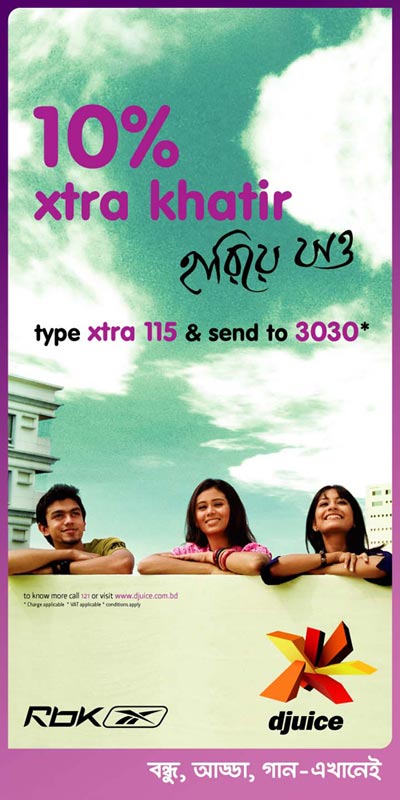
A membership offer called ‘XTRA Khatir’ (discount on many fashion stores, restaurants, CDs, sports stores, etc.) was also provided.
Customer loyalty programs in Bangladesh were very rare back then, mostly available for corporates with credit cards, so this move again delighted the young consumers.
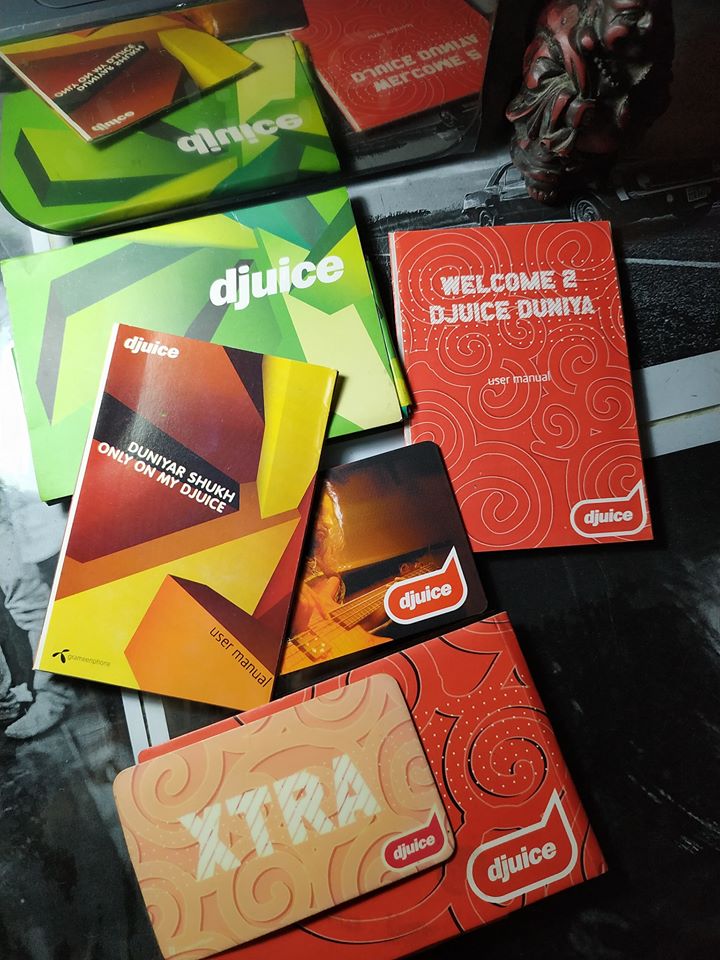
The primary medium used were television, newspapers, magazines, and billboards. Their ads also created ambiguities (done intentionally by the GP team) about the product, which aroused curiosity in people. This led to more conversations around the brand.
To attract the young customers, pricing was kept competitive. Djuice also provided SMS, MMS, and internet services at an affordable price.
The Game-Changing Promotional Offer
It was a good launch, and things were looking positive for djuice. The team was excited and hungry for more success.
Now it was time to increase brand penetration.
One day, out of the blue, someone noticed that the network of GP goes pretty much unused during the nighttime.
Someone asked, “Why don’t we give an offer to our customers, where they can talk all night for free?”
Everyone instantly loved the idea. It was formulated and pitched to senior management. Some of the team members were skeptical but they decided to give it a try.
Thus, the ‘free after the first pulse post-10-AM offer’ came to life. This meant that after the first 1 min, users could talk for free until the call ends, allowing all-nighter conversations for almost no fees.
What happened was beyond imagination.
Within the first two weeks, the number of djuice subscribers grew at an unprecedented rate.

Every university and college student, every young employee, any young boy or girl who could afford a mobile phone got their hands on a djuice SIM card.
Both sales and usage skyrocketed.
At one point, the traffic got so huge that it started congestion and disrupted service to the paying users. To solve the issue, the starting hours of the offer had to be pushed back from 10 PM to midnight.

(Thankfully, telecommunication didn’t rely on manual operators anymore!)
The youth took advantage of the conference option on their mobile phones, and midnight ‘adda’ or hangouts became a part of the digital experience of Bangladeshi youth. As it was four years before the launch of Facebook, djuice could be dubbed as the unofficial social media channel in Bangladesh at that time.
People found new friendships, relationships, and more importantly, a sense of community.

Unlimited talk-time at night allowed the youth a kind of freedom they had never felt before.
This digitalization also had a democratizing element. Before this period, only a few privileged houses had a system to arrange a conference call using the traditional phone services. But now, with the mobile phone technology, even ten people could join a conference call for almost no cost at all.
Such an inclusive, first-time-in-the-history offer kept djuice’s user base skyrocketing.
Here’s a TVC that aimed to position djuice with nightly fun activities with friends:
Incremental Promotional Efforts
To increase brand awareness and penetrate the market further, djuice team kept taking new initiatives.
The most famous of them was Drockstar, a ‘Battle of Bands‘ for Bangladesh. Legendary Bangladeshi rockstars like the late Ayub Bacchu, Partha Barua, Shafin Ahmed, and others appeared as judges. Bands like Bortoman, Dour, Radioactive, Eclipse, Power Surge, Dreek emerged through the program. To date, it is the most popular and successful TV program made on the competition of bands.
Here’s a clip of an audition round of Drockstars:
Using these musicians, both the judges and participants, djuice started organizing big concerts which were attended by massive crowds. There were multiple times when the crowd gathered way earlier than the starting time, leading the organizers to shut down new entries to the venue an hour or two before the event!
Sometimes, people even climbed the venue walls and even trees to see the performance. There were times when the local police had to be enforced to manage the crowd.
More entertainment programs like Awaaj Pathao, Dfoorti were also launched.
This TVC focused on the WAP service of djuice, and includes cameos from some of the acclaimed filmmakers of Bangladesh. It is to be noted that back then, these filmmakers were in the early phase of their career and they were themselves a part of the target audience. In the pre-Facebook era, it could be seen as form of influencer marketing, had that category existed.
Decision for Rebranding
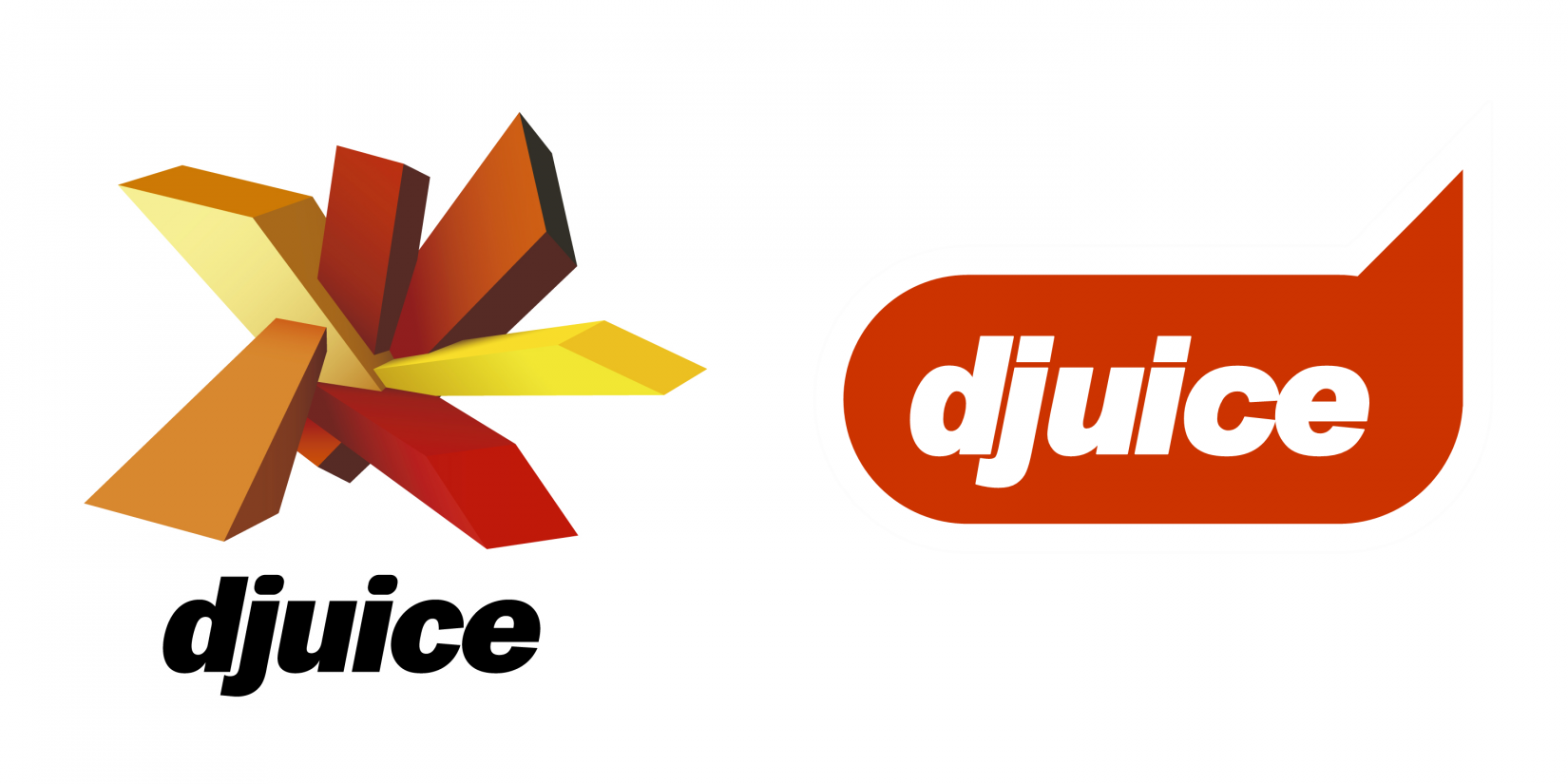
On the 14th of April, 2007, djuice Bangladesh shed its old logo and put on a new logo which was a part of the worldwide rebranding process of djuice. The concept was: “Duniyar shukh only on my djuice,” meaning – “The happiness of the world only on my djuice.”
This decision to position from “Friends, Hangouts, Song” to “Happiness of the world” could have been effort to widen the target audience.
One of the TVCs:
Competitive Advantage from Strategic Partnerships
Star Cineplex, the Bangladeshi multiplex, and djuice signed a contract to show four Hollywood blockbuster movies in Bangladesh every year. The movies were exclusively open to djuice subscribers for the first six days after release.
Xtra Khatir cardholders also got extra benefits (free soft drinks, a box of popcorn, a free ticket) with every ticket purchase.
During different campaigns, Pizza Hut provided free Pepsi, unlimited Pepsi, unique gifts (djuice pen, djuice keyring, djuice T-shirt, djuice cap) to djuice cardholders by different partner shops.
Djuice also partnered with G-series, a major record label company, to promote underground music bands.
djuice bandana and ‘fatua (a special Bangladeshi garment)’ during Pahela Baishakh (first day of the Bengali year, a festival celebrated each year) was another hit combo of free merch.
‘Hariye Jao’ – The Iconic Campaign
In November 2008, djuice launched a new campaign. It had an underlying theme, that being djuice allows oneself to ‘Break Free (হারিয়ে যাও)’ from the monotonous life. The djuice teams visited 52 university and college campuses nationwide.
They wanted to provide a platform for the aspiring youth of our country who had the desire to do something unique like being a model, RJ, or lyricist; but didn’t have the opportunity.
At this point, the fans of the free spirited, music loving, youthful brand of djuice were living in that lifestyle promoted by the brand. Such fans were being called as the ‘djuice generation’.
The fans and the followers of the brand loved the uniqueness of their lives but there was also a traditional group of Bangladeshis who were uncomfortable with how the fast the youth of the nation were changing and asking if all of these campaigns were aligned with the traditional Bangladeshi cultural values or not.
‘Tumi Ki Shara Dibey?’ – The Song that Rocked the Nation
Regardless of reservations, djuice continued to engage the youth. As part of a 2008 campaign, djuice launched a song featuring popular musicians Jon Kabir and Mila, composed by Fuad. Like many previous djuice campaigns, this song, ‘Tumi Ki Shara Dibe?’ (which could mean, “Will you say yes” and “Will you respond?”) went viral nationwide.
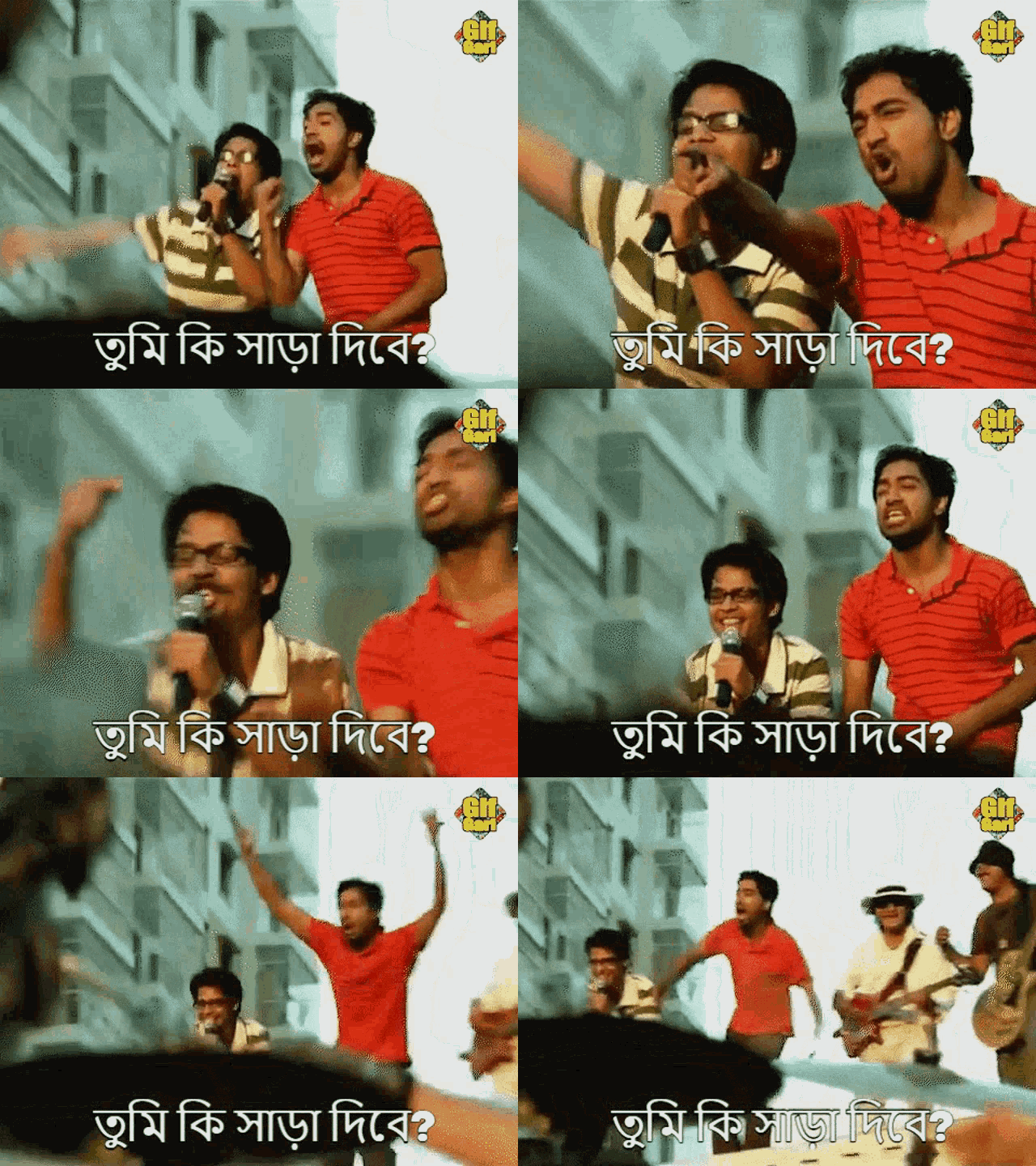
You can watch the TVC here:
Users could set the song as their welcome tune for a fee, and then GP saw a record-breaking number of downloads. The actual song is still popular among some users.
Combining all of these efforts, what marketing guru Seth Godin calls building ‘Tribes’ (an active community that follows the brand), was built by djuice. It officially had a cult-like presence.
Facing Criticism from the Older Generations
Not everyone appreciated the language and attitude portrayed in the communication of djuice. People criticized djuice for promoting slang and aggression.
As the years progressed, the allegations also increased. Some blogging platforms started speak against the brand, saying that they were promoting cultural elements to the youth that are alien to Bangladeshi culture.
All this negativity may have struck a nerve of the senior management of GP.
‘De-mise’ of djuice Came Slowly
Eventually, GP team felt that they needed to focus more on their other brands and defocused their attention on djuice. The reasons behind the decision remain unknown. The last major campaign for djuice was a tribute to the national poet of Bangladesh, ‘Kazi Nazrul Islam.’
djuice was not formally discontinued, but there was no marketing for it.
A few years later an attempt was made to rebrand it, but it wasn’t continued as vigorously as before.
The Aftermath
Even after being a brand that was THE trendsetter in the category, djuice is no longer the iconic brand it once was. It is no longer offered in stores as a standalone package.
Those young customers that djuice had captured have all grown up (at least, physically). Many of them are married with children and settled down, some of them having met through those digital ‘addas.’
The mention of the name djuice can still trigger memories of joy, laughter, an age of innocence, and mischief.
Bangladesh, however, has been refilled with a new and energetic Gen-Zs and Gen-Alphas. Now the brand Airtel has a strong positioning in that segment, who have a similar language and tone of djuice.
Some would say that djuice could have still maintained its market share in this TG. Some would say that alongside arts and entertainement, djuice could also develop other platforms for youth, that led to their financial empowerment and skill development.
But why Grameenphone decided to defocus on djuice and let go of the Customer Lifetime Value (CLV) from their loyal customers – still remain a mystery.
If GP kept its focus on djuice, would it have been profitable? More importantly, can they revive djuice? Will it be a good idea? Write your thoughts, reactions, in the comments!
And if you have lived in that era and used a djuice, feel free to share your memories!
*Disclaimer*
This post has been verified by two core team members who were heavily involved in the project. If you were in the GP team back then and have something to add/remove, please send a message to my Facebook Page.