
Accelerate Your Learning Speed with Tested Health Hacks
3 October 2024 2024-11-21 20:46Accelerate Your Learning Speed with Tested Health Hacks
Accelerate Your Learning Speed with Tested Health Hacks
 msohanh
 I’ve been a productivity obsessed person since 2014, and it began with a focus on improving how I can do things faster. I spent time on ideas like, how to learn a subject in half the time, doubling up your learning speed. Or, how to complete a task in half the time it takes normally. I read productivity books like The 4-Hour Workweek, followed productivity YouTubers like Thomas Frank (whose channel was called College Info Geek back then and had less than 100K subs), finished the course ‘Learning how to Learn’ and kept applying them to see what works.
After 20+ books and 100s of hours of videos, and witnessing the emergence of new productivity gurus like Ali Abdaal, Matt D’avella, Jeff Su, et al, I realized that it all revolves around our health. Especially our learning experience.
In this blog we focus on scientific health hacks that have stuck with me over the years which can help you with your academic success. Scientific research supports that a balanced diet, regular physical activity, and mindfulness practices can improve cognitive function, memory retention, and overall brain health.
Difficulty Level: Moderate. Implementing health hacks requires some changes to daily habits, but they are manageable and highly beneficial.
Hours Taken: Initial planning and adjustment may take a few hours, but ongoing maintenance can be integrated into your daily routine without significant time investment.
Let’s start with the food choices.
Diet for Optimal Brain Health
The food you consume directly impacts your brain’s structure and function. Omega-3 fatty acids and antioxidants are crucial for maintaining cognitive health. These nutrients, found in sources like fruits, nuts, and fatty fish, provide the brain with the necessary support for learning and memory retention.
Omega-3 Fatty Acids
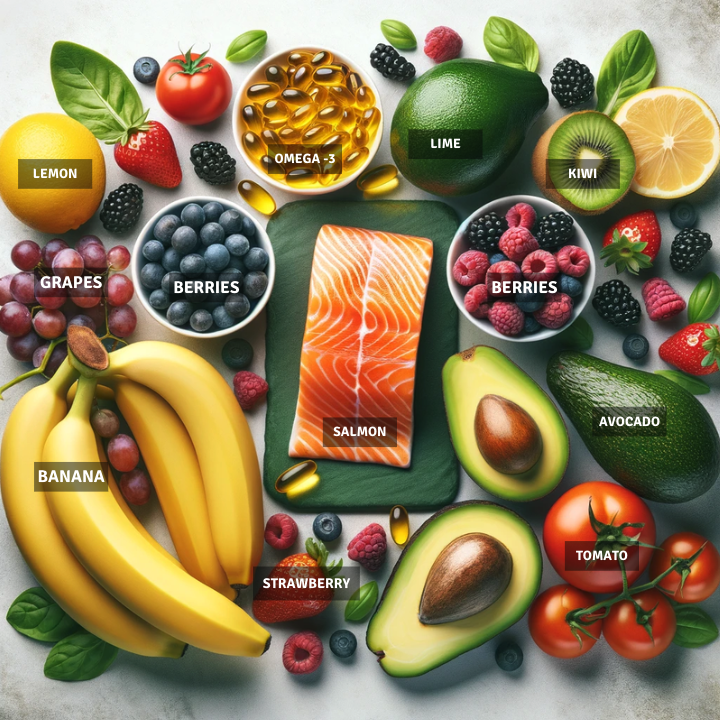
These essential fats, abundant in salmon and supplements, are vital for brain health. According to Nutrients, omega-3s not only help maintain brain structure but also enhance learning and memory. Incorporating these into your diet is a straightforward yet impactful change.
Fruits and Nuts
A diet rich in bananas, berries, and nuts offers essential vitamins and antioxidants. Research from Frontiers in Aging Neuroscience suggests this combination helps preserve cognitive function and reduce age-related decline. Adding these to daily meals is an easy win for brain health.
Difficulty in implementation of this hack: Meal planning and preparation might take 1-2 hours weekly, but integrating these foods into your diet is straightforward.
Please note – for dietary changes seek professional help before you make a big change.
Exercise for Boosting Memory and Focus:
Exercise ≠ gym.
When asked to exercise, many people give the excuse that they don’t have the time or money to join a gym.
But unless you’re preparing for a bodybuilding competition or aiming to be a fitness model, exercise can be done in many ways. Jogging, running, cycling, and yoga are all useful and require less discipline than following a workout routine that involves targeting different muscle groups on different days. You can also exercise at home with a YouTube workout video.
Exercise is so helpful to improve your learning capacity that this article on Harvard Health is literally titled, “Exercise can boost your memory and thinking skills.”
Science approves:
- Physical Activity and Cognitive Function: Engaging in regular exercise has been shown to improve cognitive function and academic performance. A meta-analysis published in Pediatrics found that physical activity interventions positively influenced academic achievement, cognitive skills, and classroom behavior in children and adolescents.
- Yoga for Stress Reduction: Yoga, a form of mind-body exercise, has been linked to reduced stress levels and improved mental well-being. Research published in the Journal of Clinical Psychology suggests that yoga interventions can decrease perceived stress and enhance emotional regulation, potentially benefiting academic stress management.
Difficulty Level: Depends on the duration and the type of exercise you choose. Start with what works best for you.
Tips to apply:
- Jogging/Running/Cycling: Schedule morning or evening jogs, runs, or cycling sessions around your daily routine.
- Yoga: Incorporate yoga sessions into your morning or evening routine to relax and improve focus. I found that 20-30 minutes of yoga before going to bed increased the quality of my sleep and also made waking up from sleep much easier.
- Home Workouts: Find workout videos that suit your fitness level and schedule, and set aside time for regular sessions. Having a set of dumbbells and a skipping rope could increase variation in your home workout sessions.
Meditation for Enhanced Cognitive Performance
Meditation offer significant benefits for cognitive performance. It improves attention, concentration, and memory by reducing stress and clearing mental clutter. Incorporating deep breathing exercises or short meditation sessions into your day is simple yet effective. These practices support overall well-being and cognitive function, requiring minimal time and effort.
Difficulty Level: Low. Mindfulness practices, such as deep breathing exercises, are simple to learn and incorporate into your daily routine. Each session requires as little as 5 to 10 minutes, easily fitting into your daily schedule. Increase the duration if you have time.
Sleep, Nap, and Rest to Improve Your Learning
Adequate sleep is fundamental for focus, retention, and cognitive performance. While learning, quality sleep consolidates memories and refreshes the brain for the next day. Sleep is essential for cognitive functions such as memory consolidation, creativity, critical thinking, and problem-solving. It also reduces stress and supports immune function, contributing to better academic performance.
Difficulty Level: Moderate to difficult. It requires a commitment to consistent sleep schedules and creating a conducive sleep environment. Establishing and maintaining good sleep habits may require a few hours of initial planning and adjustment.
Tips to Apply:
- Get Seven to Eight Hours of Sleep: Although it might not be feasible to get seven to eight hours of sleep every night, aim to make this your routine.
- Be Consistent: Consistent sleep schedules align with your natural circadian rhythms, promoting better sleep quality and daytime alertness.
- Take a Nap: Short naps can improve memory and learning ability by giving your brain a chance to rest and consolidate information. But don’t go overboard as you might fall asleep. According to WebMD, napping for approximately 30 to 60 minutes is good for decision-making skills, such as memorizing vocabulary or recalling directions. We can easily infer that such naps will help us in learning.
- Work Smarter, Not Harder: Avoiding long study sessions and taking regular breaks prevents cognitive fatigue and improves learning efficiency. You can use the Pomodoro Technique where after each 25 minutes of work, a 5-minute break is taken.
- Avoid Taking Coffee During the Evening: Avoid drinking coffee close to bedtime as it can disrupt your sleep. Caffeine levels peak in your bloodstream about an hour after consumption and can remain elevated for several hours, with half of the caffeine still in your body after six hours. To ensure restful sleep, consume your last cup of coffee at least six hours before you plan to go to bed.
Before you leave.
I really hope I haven’t handed you a long grocery list of things to do to be the ‘Perfect student’ and generated FOMO or insecurity in you in the process. The worst possible outcome would be that you read the blog but didn’t take any action.
Diet, exercise, journaling, and meditation are amazing habits for accelerating learning speed.
But, you might still think, “I don’t have enough time for these because I have to do a lot of things.” If that’s still the case, please give this thought a consideration.
Say, after your classes, part-time job, and chores, you have only 2 hours to study everyday. If you spend 10 minutes on exercise, 5 minutes on meditation, and 5 minutes of journaling, you will have 1 hour and 40 minutes.
Try out both approaches – one day, business as usual, study for 2 hours.
Another day, start with a 10-minute stretch, then do 5 minutes of meditation visualizing what you plan to learn, then study for 1 hour and 40 minutes, and wrap with 5 minutes of journaling, reflecting what you learn.
There is a huge possibility of the second method being more productive. And here’s the best thing. If you don’t try both approaches and compare the outcome, your brain will always tell you “Nah, just go for study. These other tasks will take too much time.”
In short, you will not find motivation, and miss out on learning more with less effort and stress. Just because your imagination told you it’s not worth it.
But if you try the second approach, and you spend 20 minutes exercising, meditating, and journaling, you’ll boost your learning speed so much that you’ll achieve more in the remaining 1 hour and 40 minutes of studying than you would in a full 2 hours without these activities.
Your brain will not be able to reject the reality that the second method is far superior. As you start doing the task a few times, your body and mind will start to enjoy the benefits. Eventually, you’ll be hooked and it won’t seem like a big, scary habit anymore.
When you have one habit set, then work on another one to stack on top of it. Continue evolving.
I wish you all the best!